Your Brand Lives Somewhere: A Guide to Branding Photography on the Central Coast
There are plenty of beautiful places to take photographs on the Central Coast. That doesn't necessarily make them good places for a branding shoot.
A beautiful beach at sunset is lovely. But if you're an accountant specialising in construction businesses, standing barefoot in the shallows staring thoughtfully towards New Zealand may raise more questions than it answers.
Good branding photography isn't really about finding the prettiest backdrop. It's about finding a place that helps tell the story of your business. And on the Central Coast, we're rather spoilt for choice.
Within a relatively short drive we have beaches, headlands, lakes, bushland, old shopfronts, cafés, studios, industrial spaces and hinterland. Each has its own personality.
The trick is working out which one belongs in your story.
Your location is part of your brand
When I'm planning a branding shoot, I'm not just thinking about where the light will be good.
I'm thinking about what someone should understand about you before they've read a single word on your website.
Are you established and confident?
Creative and slightly unconventional?
Warm and approachable?
Quietly premium?
Practical and hands-on?
Your surroundings can communicate a surprising amount of that. Sometimes the right location is somewhere recognisably Central Coast. Sometimes it's your workshop, office or studio. Sometimes it's an unremarkable laneway with magnificent light and a wall that happens to be exactly the right shade of grubby green.
That's part of the fun.
So rather than treating the Central Coast as one enormous collection of beaches, let's look at a few different locations and what they could bring to a branding shoot.
Terrigal and The Skillion: confident, coastal and established
There aren't many Central Coast landmarks more recognisable than The Skillion. Which is precisely why I wouldn't necessarily put you directly in front of it.
Hear me out.
For consultants, architects, property professionals, designers and established local businesses, the area around Terrigal Haven and The Skillion can give us a wonderful sense of place without turning every photograph into a tourism brochure.
We can use the pathways, headland, rock, vegetation and glimpses of the ocean. The Skillion might appear clearly in one establishing image, then become a small detail in the background of another.
The location says Central Coast without shouting it through a megaphone.
Terrigal itself also gives us plenty of variety. Within a relatively small area we can move between coastal landscapes, cafés, streets and more polished architectural backgrounds.
That variety matters.
A branding session should give you a library of images, not 37 photographs that are essentially the same portrait with your head tilted three degrees further to the left.
For the right business, Terrigal can communicate confidence, professionalism and connection to the Coast, while still feeling relaxed.
Long Jetty: creative, independent and a little bit odd
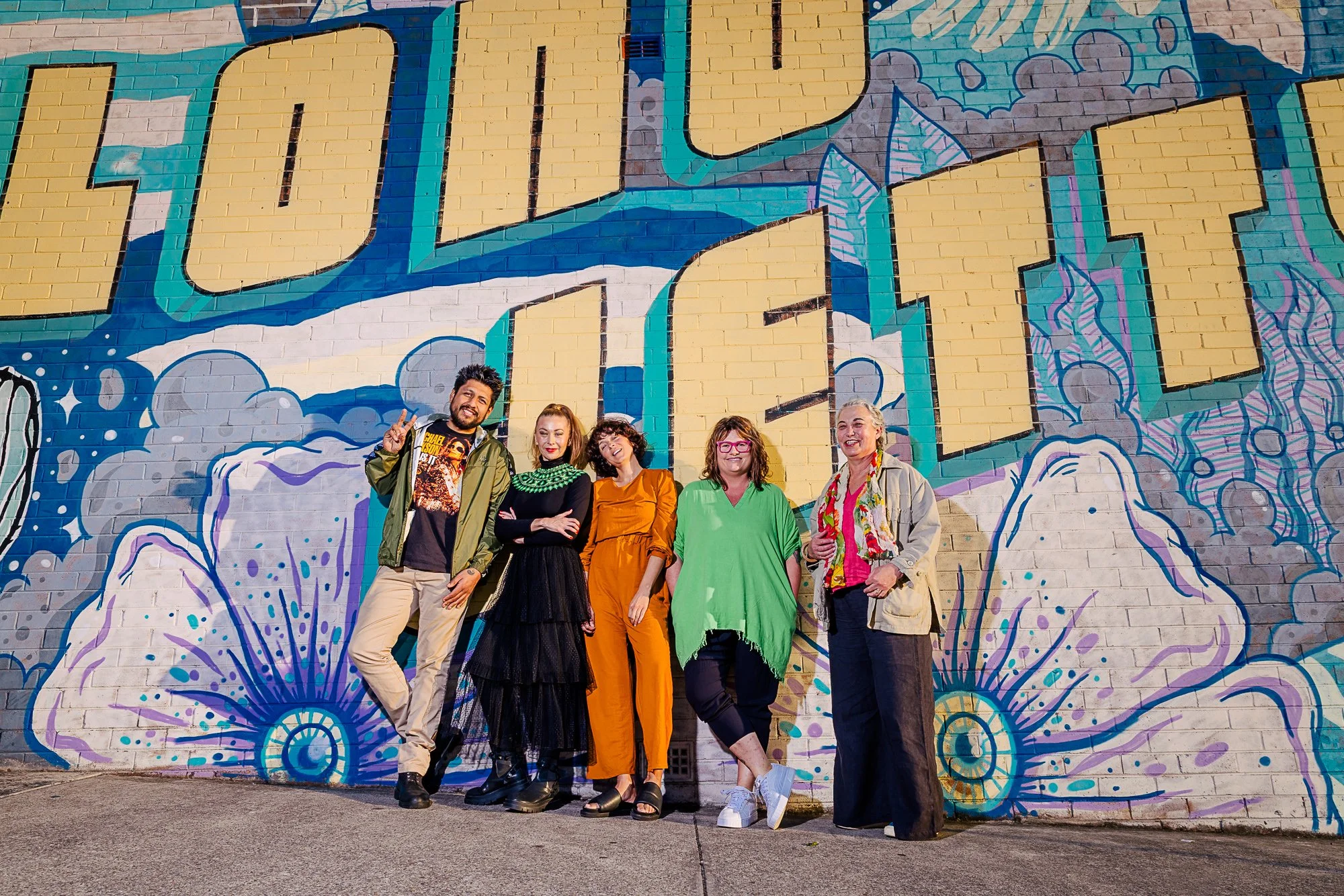
A group of Central Coast Council CAC winners posing in front of the famous Long Jetty wall art
Long Jetty is a completely different beast.
And I mean that as a compliment.
There's an interesting mixture of old shopfronts, cafés, murals, signage, laneways, vintage influences and lakefront. It's a place with texture.
That makes it brilliant territory for makers, designers, stylists, musicians, hospitality businesses, creative agencies and independent retailers.
Instead of arriving, finding one attractive wall and spending an hour posing in front of it, I'd rather build a little visual journey.
We might start inside your business.
Then walk through the neighbourhood.
Coffee. Shopfront. Working shots. Details of your hands. Crossing the street. A portrait against an unexpected wall. Something slightly strange we discover along the way.
Then perhaps finish near the lake as the light changes.
Suddenly we haven't just created some headshots.
We've created a visual story about you and the place your business belongs.
And that's far more useful when you're trying to feed a website, LinkedIn, Instagram, newsletters and whatever social platform we're all apparently dancing on next year.
Norah Head: heritage, craftsmanship and a bit of drama
Norah Head Lighthouse has some rather magnificent ingredients.
Big sky. Ocean. Headland. Rock. Weathered surfaces. Architecture. Wind.
Quite a lot of wind, sometimes - bring a hairstyle that can survive a mild weather event, or better yet, embrace the "windswept visionary" look. Nobody has ever accused a slightly dishevelled architect of looking unqualified.
For brands built around craftsmanship, longevity, nature or provenance, that landscape can be incredibly effective.
I could see it working beautifully for an architect, local maker, landscape designer, boutique accommodation business, environmental organisation or a personal brand with a quieter, more considered personality.
Again, though, the lighthouse doesn't have to dominate every frame.
One photograph might establish exactly where we are.
For another, the lighthouse might be soft and out of focus behind you. Then we can move onto the headland for something wide and cinematic, before finding a completely different texture for a tighter portrait.
The location becomes part of the story rather than the reason for the photograph.
Which brings me to one of my favourite rules:
You don't need to stand directly in front of a landmark for people to recognise where you are.
Sometimes ten per cent landmark is considerably more interesting than 100 per cent postcard.
Bouddi National Park: earthy, adventurous and quietly premium
Bouddi gives us another visual language entirely.
Bush. Sandstone. Coastal tracks. Beaches. Dense vegetation. Open views.
It's tactile and imperfect, which I like.
For environmental businesses, wellness practitioners, outdoor brands, makers using natural materials, tourism operators and businesses wanting something grounded rather than glossy, it can work beautifully.
But here's where location choice becomes more interesting.
Your location doesn't have to explain what you do.
It can explain how you want people to feel about what you do.
A leadership coach doesn't work in Bouddi National Park.
But perhaps their whole approach is about getting away from noise, finding clarity, changing perspective and making better decisions.
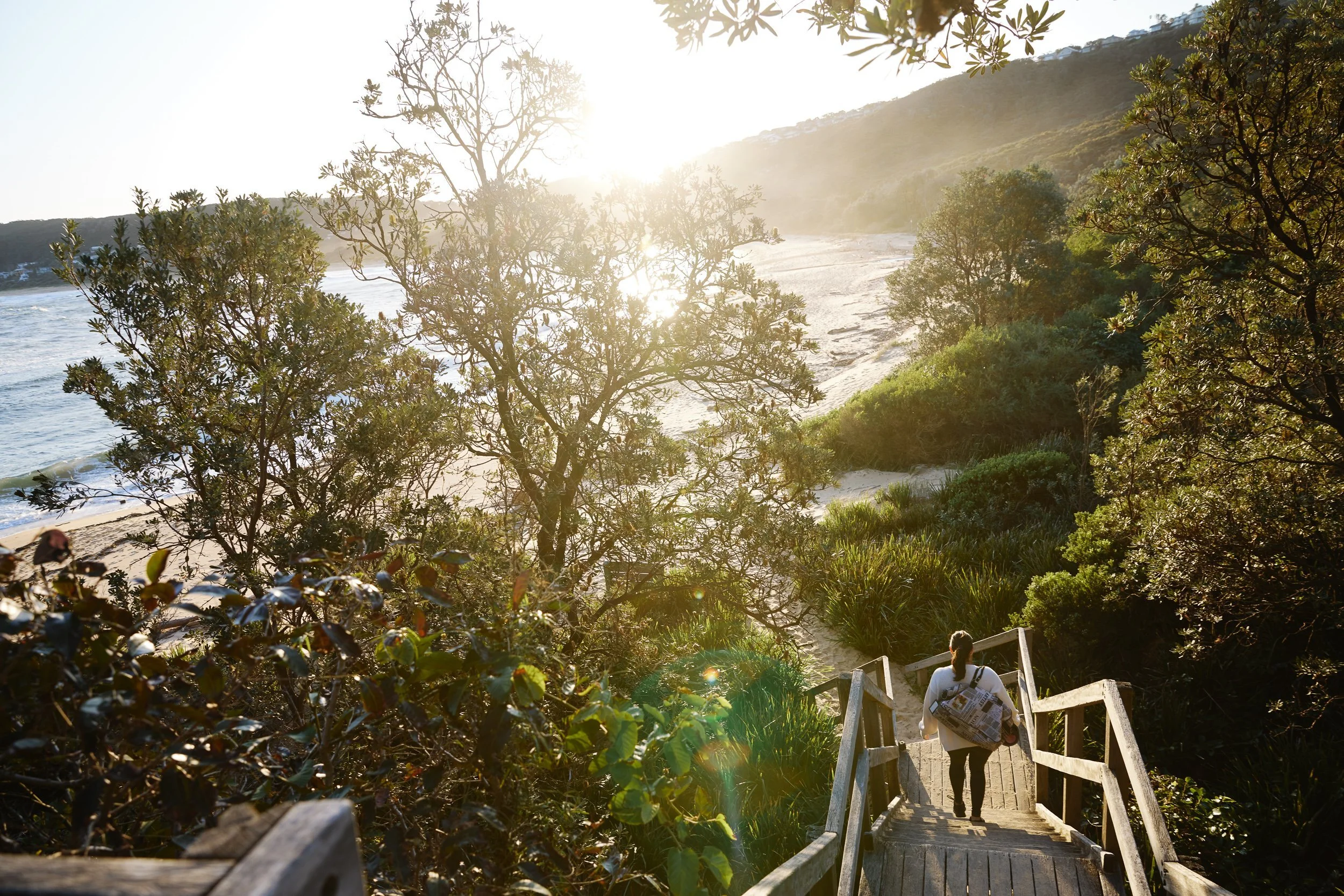
Bouddi National Park is a fabulous backdrop with its imperfect and weatherd feeling
Now Bouddi makes perfect sense.
We're not illustrating their job.
We're illustrating the idea behind their brand.
That's a very different thing.
Avoca Beach: warm, human and connected
Avoca has another personality again.
There's the beach, lagoon, village, cafés and a more lived-in coastal feeling that can be lovely for brands built around relationships and community.
Think family businesses, therapists, coaches, allied health professionals, creatives, cafés and service businesses where trust and approachability matter.
We don't necessarily need to make you look terribly important. I'd rather make you look like someone your customers actually want to meet.
That might mean walking through the village rather than posing. Sitting over coffee rather than sitting behind a desk. Talking, laughing, moving and interacting with the environment.
The best photograph might happen between the photographs we planned.
It often does.
Somersby and the hinterland: the other Central Coast
It's easy to forget that the Central Coast doesn't end approximately three metres above the high tide mark.
Head inland and everything changes.
Around Somersby and through the hinterland we have rainforest, orchards, farms, paddocks, winding roads, workshops, old sheds and wonderful pockets of landscape.
For food producers, growers, artisans, trades, sustainable businesses, florists and anyone whose brand is connected to making physical things, this opens up an entirely different visual world.
But it also raises an important question.
Do we need to go anywhere at all?
Your workplace might be your best branding location
Some of my favourite branding environments aren't famous.
They're not even particularly attractive.
They're workplaces.
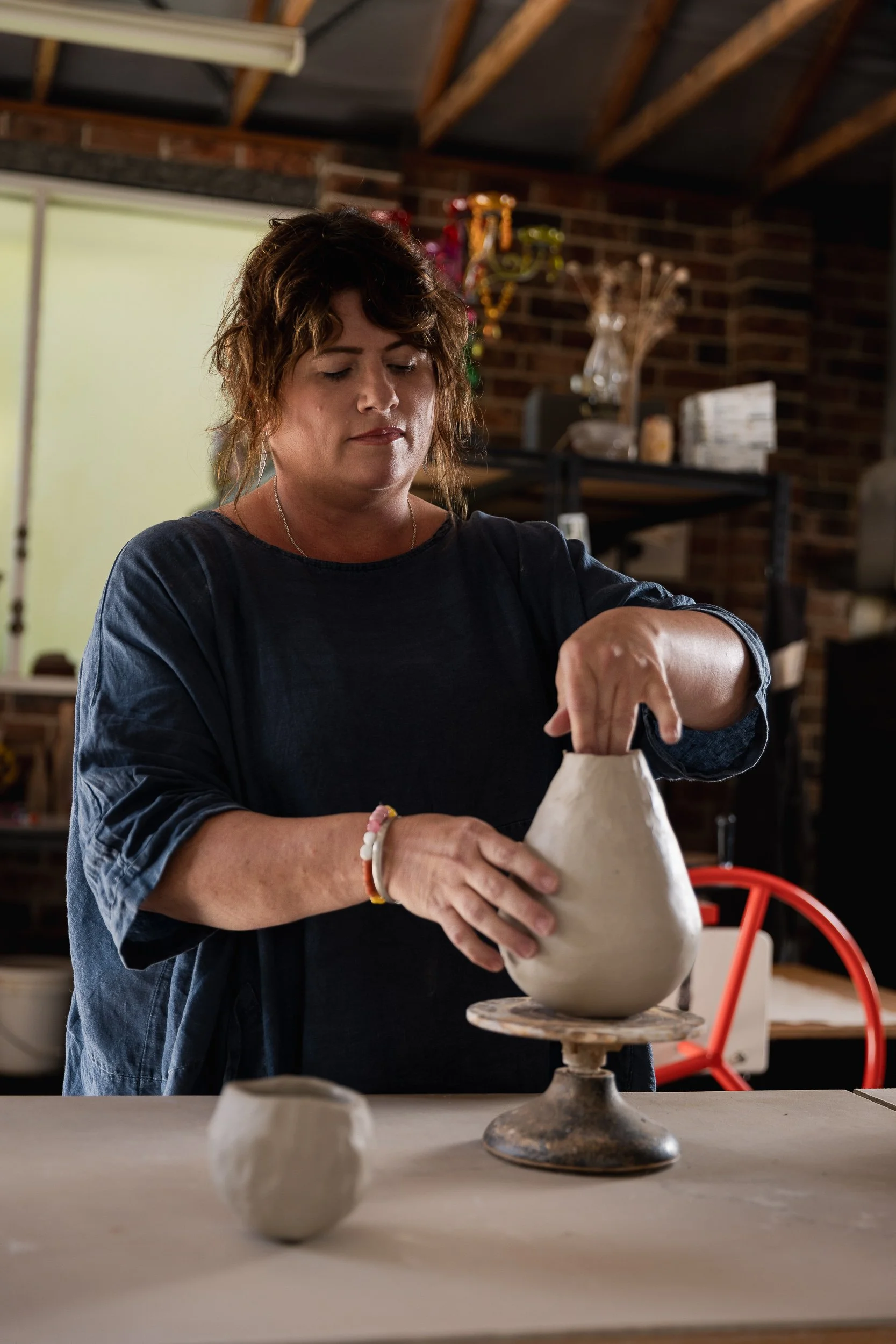
The potter's messy studio.
The florist's floor early in the morning.
The designer's desk.
The builder's ute.
The chef's kitchen before service.
The maker's hands.
The coffee machine that's made approximately 14,000 flat whites and has the emotional scars to prove it.
These places contain evidence of what you actually do.
Scratches. Tools. Materials. Half-finished work. Notes. Objects you've collected over the years.
They're difficult to manufacture in a hired studio because they're real.
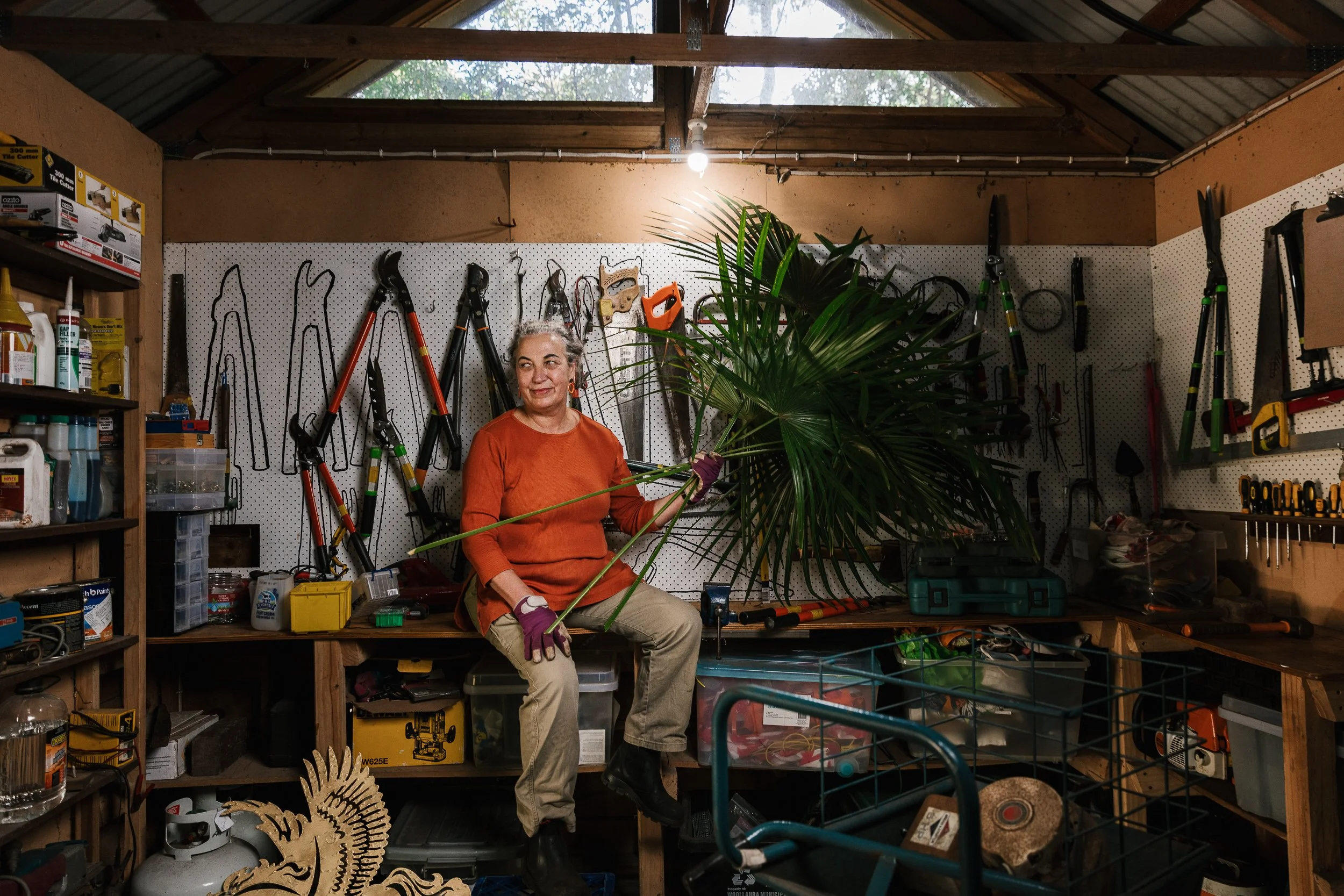
If we're photographing a maker on the Central Coast, for example, I might prefer to spend most of the session in their workshop and then step outside for a handful of environmental portraits.
Now we have the best of both worlds.
We know what they do, how they do it and where they belong.
So, how do you choose a branding photography location?
Before deciding where we're going to shoot, I'd ask five questions.
1. Where does your business actually happen?
Start with reality.
Where do you work? Where do you meet clients? Where are your products made?
Sometimes the obvious location is already the best one.
2. Where do your customers expect to find you?
This doesn't mean we have to give them exactly what they expect.
Quite the opposite.
But it's useful to understand the visual language of your industry before deciding whether we want to embrace it or gently poke it with a stick.
3. What should your brand feel like?
This is more useful to me than being told you want photographs that look "professional".
Professional could mean almost anything.
Give me words like curious, clever, warm, irreverent, precise, earthy, sophisticated or adventurous.
Now we have something to work with.
4. Is there somewhere that actually means something to you?
This is where branding photography becomes personal.
Perhaps you walk at Avoca every morning.
Maybe your business started at a particular café in Long Jetty.
Perhaps your family has lived around the Coast for generations.
Or maybe there's a completely obscure location that has nothing to do with your business on paper, but somehow feels exactly like you.
Tell me about it.
Those details are usually far more interesting than picking somewhere because Instagram says it's photogenic.
5. How much variety can we create without spending the shoot in the car?
This one is wonderfully practical. A good branding location isn't necessarily the most spectacular place. It's somewhere I can turn around and find six different photographs within 50 metres.
A wall.
A window.
A café.
A street.
Some interesting texture.
A landscape.
A weird little alley with surprisingly beautiful light.
With a bit of planning, one small area can look like several completely different shoots. That's particularly useful because the goal of a branding session isn't one magnificent photograph.
It's a library!
Think in terms of a visual library, not a headshot
This is probably the biggest difference between traditional business portraits and branding photography.
A headshot answers one question:
What do you look like?
Branding photography can answer dozens.
What do you do?
Who do you work with?
What does it feel like to work with you?
What do you care about?
Where are you based?
How do you work?
What makes your business different?
What little details make it yours?
That's why I like to mix portraits with wider environmental images, working photographs, close-up details, movement, interactions and those slightly odd moments that make someone stop scrolling for half a second longer.
Because you need different photographs for different jobs. Your website banner needs space for text. Your About page needs personality.
LinkedIn might need something slightly more polished. Instagram can afford to get strange.
A newsletter might need a horizontal image that vaguely relates to the thing you're talking about.
And three months after the shoot, someone will inevitably ask for a photograph in a format nobody knew existed.
A good image library gives you room to move.
The Central Coast should feel like a character, not a backdrop
This is what I keep coming back to.
I don't want to take a generic branding photograph and simply insert a Central Coast landmark behind you.
I'd rather use the Coast as part of the visual language of your business.
Maybe that's the polished coastal energy of Terrigal. The creative texture of Long Jetty. The drama of Norah Head. The quiet landscape of Bouddi. The warmth of Avoca. The earthiness of the hinterland.
Or perhaps it's the battered workbench in your own studio.
There's no universally perfect branding photography location. There's just the place that makes sense for your story.
And occasionally, there's a magnificently grubby wall with extraordinary afternoon light.
Never underestimate the grubby wall!