Hand painted backdrop
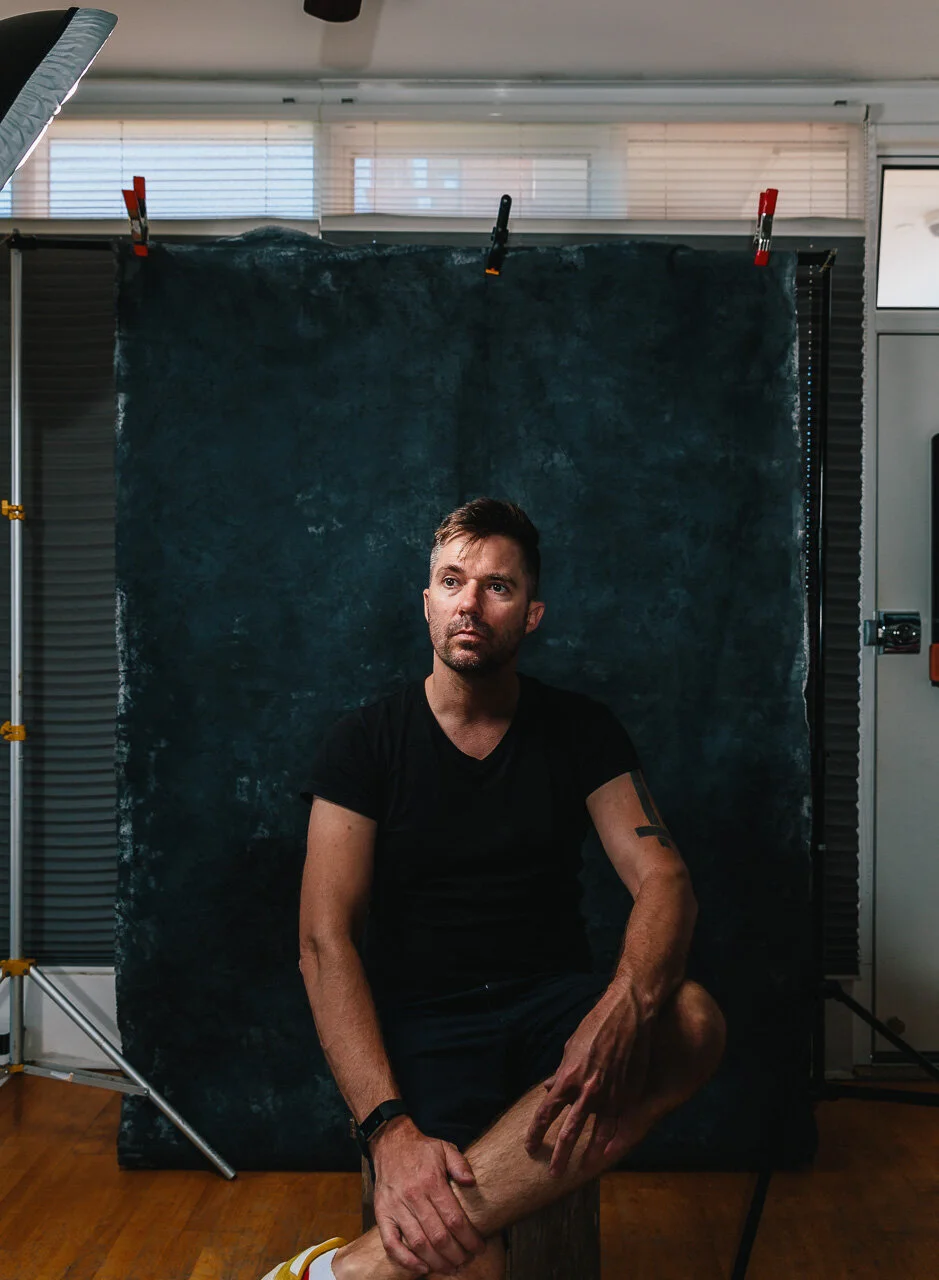
Hand painted backdrop
How to create your own DIY version
For ages I have wanted to get my own hand painted photography backdrop (Like the beautiful Oliphant Studios lusted after by every photographer) but time and money are the ever present obstacles to a lot of my hair-brained ideas.
Like most things I like to give it a hands on try to learn as much as I can. This gives me a solid base for when I want to compare the commercial products out there and see if they are of the quality I want and more importantly the correct thing in the first place. Ive spent a lot of money on equipment only to find out that in practice I needed something different.
So on to painting my own backdrop.
I started by gathering all the materials I needed.
Plastic sheeting.
Tarpaulin
Tape
1 linen canvas drop-cloth 2m x 4m. I got mine from Spotlight.
1 litre of gesso
2 litres grey paint (acrylic)
500ml black paint (acrylic)
1 litre white paint (acrylic)
roller and tray
Sponge
Old rag cloth
Large brush
2 wooden poles to help stretch the cloth
Rubber gloves
We live in a small apartment in Bondi. Even large apartments are pretty low on space at the best of times so I decided to relocate everything downstairs in to the car park during the day so as to avoid the bulk of daily traffic of people heading off to work.
First I laid out my tarpaulin which covered half of my workspace, the remainder I covered with the plastic sheeting.
The canvas backdrop was laid down stapled to the two wood poles. I thought this would help stretch it out but it didn’t do that at all, instead the canvas was heavy enough itself especially when I painted the primer on it. It did help in keeping the canvas down when the wind picked up though and for temporarily moving it when a car came into the parking lot.
I mixed up the gesso and water expecting it to easily coat the canvas before painting it.
It did not.
It only covered a small part of the canvas and even when it dried the canvas was still very porous. Gesso is supposed to prime the canvas and make it so you don’t need as much acrylic paint to cover it. This part feels a bit like a throwback from proper canvas painting and preparation technique. Im not convinced it is necessary.
I tried an experiment where part of the canvas has the gesso on and the remainder I used a watered down white acrylic (way cheaper) to prime the canvas.
After letting that dry I used the remainder of the white to give it a good base coat. Ive used my canvas a bunch of times and it sits in a hot corner of our room. Even with unrolling it fairly often I don’t see any cracking or difference between the gesso and my acrylic primed sections.
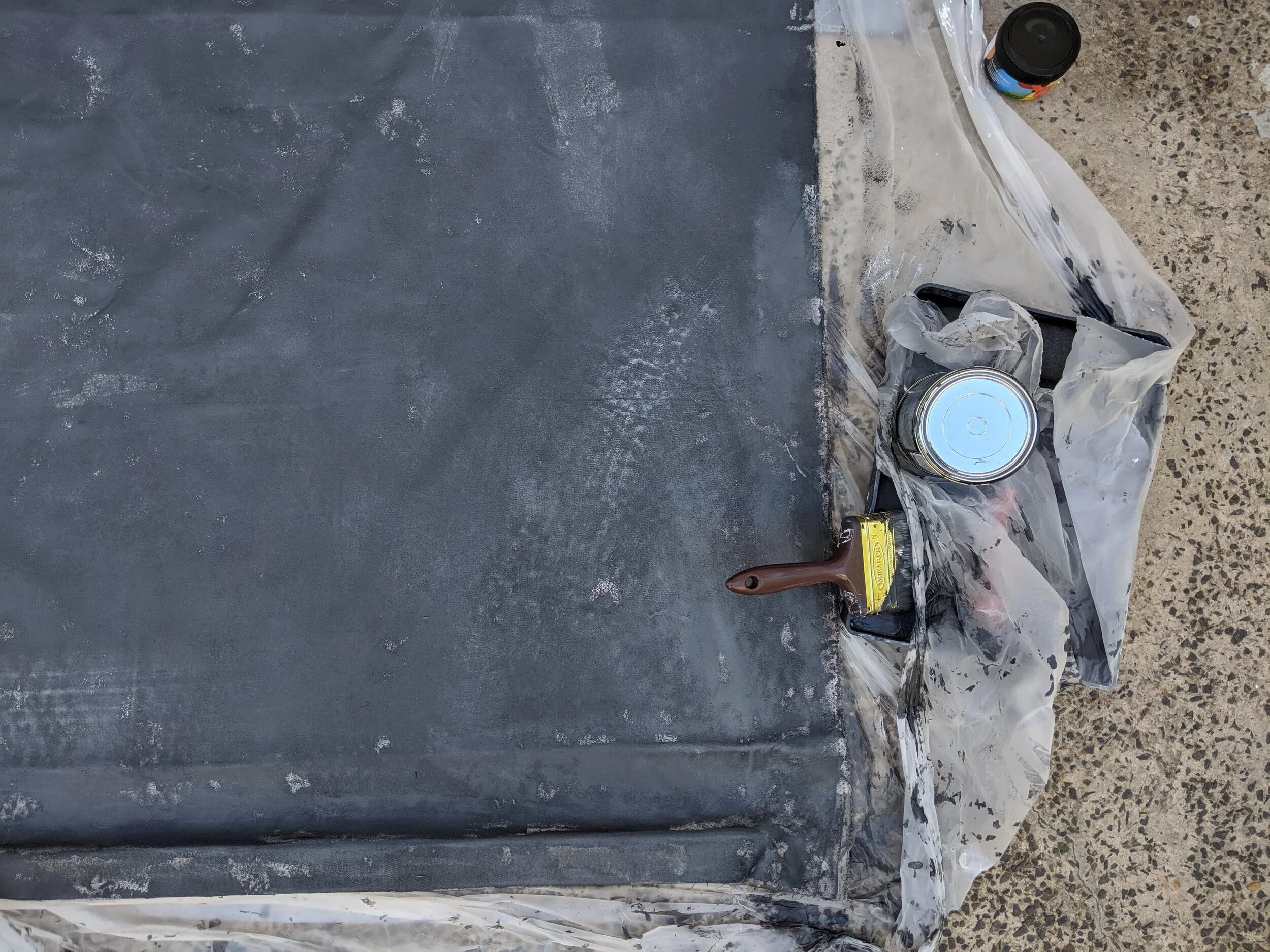
Now the fun part happens. I laid on the dark grey paint with a roller and then started dabbing on a mixture of dark grey and black. I intentionally did not mix it well as I thought it would give it a more varied texture. That didn’t work either. It’s easier to juts get the base coat on and then start with a damp rag scrunched up to dab the paint roughly all over. If it feels too dark or heavy then add some water to it. Or just use the roller and grey to go over it again. Remember that this is a backdrop and will inevitable fall out of focus a bit, imperfections give it a feeling of being alive so don’t shy away from them.
You start building up the layers of dark and then the same with the white paint (also mixed with a bit of water)
Use a large paint brush to blur the colours together. It sometimes works well to use a dry brush to heavily brush the paint just before it completely drys. It keeps the main form but smears the forms in a unique way.
A side effect of painting on a concrete surface was that the texture of the floor came through. Shifting the canvas around a bit stopped it from having a noticeable pattern whilst breaking up some of the other paint work.
I even tried the whole Jackson Pollock technique of walking on the canvas and dripping paint randomly.
All of this builds up layers if interest that make each canvas unique.
To dry it I hung the canvas from the attached wooden poles between our hills hoists to keep it as flat as possible. That was the plan until the wind got hold of it. Grass is pretty good at letting a canvas dry on and does not piss of the neighbours that want to dry their white sheets.
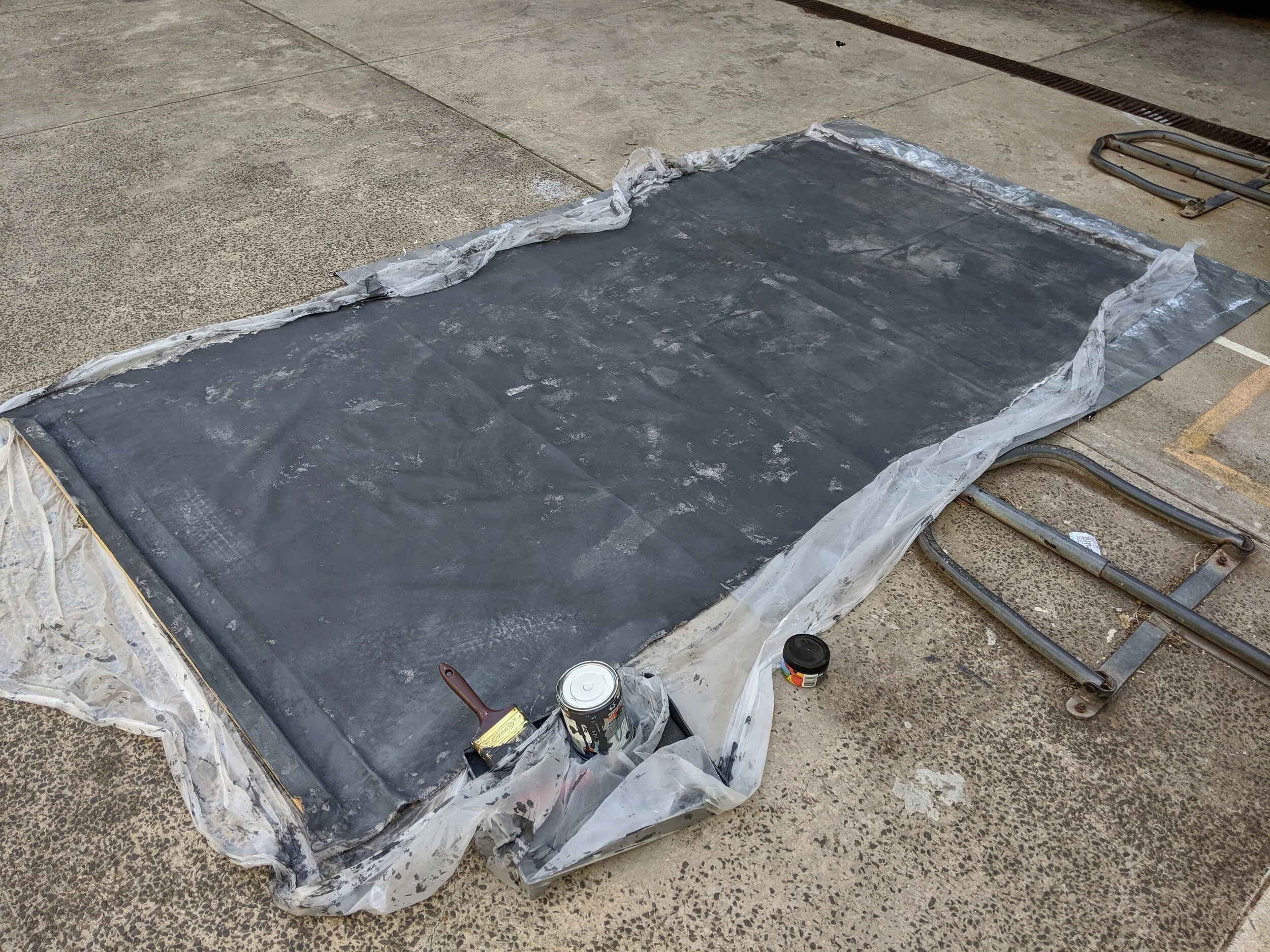
So this turned out both worse and better than I expected. It was way more of a pain in the arse to setup and work on but it is now my favourite backdrop
Things I learned for when I do this again
You don’t need gesso. Its expensive and using a white enamel watered down works just as well. Just let it dry before painting the other colours otherwise it starts so surface through the darker colours. Also use a matte not a sheen like I did, it was the only one I had so I made do with it.
Tarpaulin is not waterproof. Paint leaks through it pretty easily. The plastic paint sheets from the hardware are cheap and work bloody well. As an eco friendly alternative, throw down old cardboard boxes and newspaper.
Be rough as hell with painting. I stated out timidly and in the end I was walking on the canvas and making pretty broad strokes. You do need a delicate touch and to keep an eye on the design and texture but it’s easy enough to cover up a mistake so don’t be shy to experiment. This is a Bob Ross moment.
Paint drys darker… But not a lot darker. Take paint swatches home and photograph them to get an accurate idea of what the colours will looks like if colour accuracy it is important to your work. The way I shoot causes the canvas to fall into darkness quickly so Im glad I kept it a lighter shade of grey. It’s easier to darken the backdrop than lighten it realistically.
There are two sides to a canvas! Might as well do a second side with a slightly different shading or texture and double the fun. Paint will seep through to the other side so be prepared for a bit of touch up but even a vastly different colour works well. This canvas will become quite heavy so its not something you can take with you on long walks or down to the pub.
If you are adding black or darkening your colours with black paint, you honestly need very little. I bought the sample pots and have more than half of the paint left over.
When drying, keeping it absolutely flat is not essential. As long as there are not any sharp kinks int eh canvas, the material will keep its flat shape quite well.
Happy painting